
Offshore Oil & Gas functions best in a Mess: TEEPSA DWOB
Offshore Oil and Gas functions best in a mess. The messier the better. The messier, the less the public actually can see what’s going on.
With this in mind, this article tries to clarify the mess of administrative decisions in the TEEPSA Block Deep Water Orange Basin (DWOB) application, relating to the Deep Water Orange Basin (DWOB) Area located off the West Coast of South Africa. It will 1) ask you to sign the petition, which gives you overview, 2) give you the break down of administrative decisions that should have had a public participation process but didn’t, and 3) include ONO’s appeals to the ministries of Mineral Resources & Energy and Fisheries, Forestry and Environment :
1. OVERVIEW & PETITION
TEEPSA (Total Energies Exploration and Production South Africa – 45% ) along with its joint-venture partners (Qatar Energy International E&P LLC (30%) with partner Sezigyn Proprietary Limited (20%)), want authorisation to drill 10 offshore oil wells, and construct, using explosives, 109kms of subsea pipelines, in an extremely biodiverse and unique marine area, surrounded by multiple Marine Protected Areas (MPAs). TotalEnergies intend extending the operational life of the ageing F-A Oil Platform. Offshore Block 11B/12B is an area of 12000 km2 off the coast of the magnificent, touristic Garden Route.
Please sign this petition appealing to the Ministry of Mineral Resources and Energy and Minister of Environment, Barbara Creecy, not to authorise this Block 11B/12B project, because the risks to a marine, one-of-its-kind critical biodiversity region, subsistence and commercial fisheries, and the communities of Knysna, George and other touristic Garden Route towns are too high.
There is a very real risk of displacement of marine animals from feeding or breeding areas which could have far reaching effects not only for whole, and vulnerable, animal populations, but also on the fishing sector and our food security.
This is what is at stake:
- Threatened species: Critically Endangered blue whale, Endangered sei whale and Indian Ocean humpback dolphin, Bryde’s, sperm whales. leatherback, loggerhead and green turtles, plus Endangered African penguin; southern bluefin tuna, bigeye tuna, blue marlin, endangered Cape Gannet, Cape Cormorant, Indian yellow-nosed albatross and Atlantic yellow-nosed albatross, Vulnerable Spectacled petrel, Leach’s storm petrel. Of the 40 shark and rays species expected to occur in the area, most of which are threatened and no less than 20 species (half) are endemic to southern Africa.
- There are 6 Marine Protected Areas near where they want to drill and their pipeline will smash through a unique Critical Biodiversity Area.
- The F-A Platform was installed in the late 1980’s, and given the metocean conditions of its site, it has likely outlived the 25-year design lifeof most rigs. It is now proposed that it continue functioning in ever more extreme conditions for another 27 years. Older structures are more prone to accidents, especially fires, and are more dangerous for workers and the environment.
TotalEnergies has not responded to Oceans Not Oil’s request for an explanation for the leak of the existing offshore pipeline and the extent of environmental contamination, in the PetroSA condensate pipeline running from the offshore FA platform to the GTL refinery in Mossel Bay, 2022. - Consequences of a blowout, or accidental release (which happen as a matter of course during offshore operations) to marine and coastal ecosystems, tourism, fisheries and recreational industries will be devastating.
- Curtailing emissions from oil and gas operations must be a first-order priority to stop global warming and extreme climate events. Block 11B/12B project duration will likely span over 30 years. Last minute oil and gas production ambitions risk inconsistency with the South Africa’s binding carbon budget peak-plateau-decline emissions trajectory, pushing peaking well past Net Zero in 2050.
There is very clear jeopardy to the extremely biodiverse marine ecology, fisheries, tourism, recreation and hospitality industries. Let’s stop the pollution, the toxic wastes, the noise and cumulative effects that this project will bring to a delicate, busy marine area unlike any other. We do not want the devastation by an oiled coastline. Please share this.
We need your urgent action as follows:
1. Sign this petition to support our call on our Ministers not to grant this exploration right, and focus on developing renewable energy.
2. In addition to signing the petition we are asking that you urgently submit objections.Any RSA citizen can become an Interested & Affected party – the ocean is our commons.
Address The Objections To:
WhatsApp (text messages only): 076 694 3842
Email: gld.teepsaesia@wsp.com
Tel: +27 (0) 11 254 4800
The more objections, the better! Our voices can make a difference to show our government that we demand that oil and gas operations stop and that renewable energy jobs and climate justice start.
2. THE MESS
There were a number of administrative decisions relating to the Deep Water Orange Basin (DWOB) Area located off the West Coast of South Africa.
a. the Environmental Authorisation granted to Sezigyn (Pty) Ltd on 30 November 2018 (Decision one);
b. the exploration right granted to Sezigyn (Pty) Ltd on 30 November 2018 (Decision two); and
c. the renewal of the exploration right granted to the ‘holders’ of the right (TEEPSA, Qatar Energy International & Sezigyn) on 30 September 2022 (Decision three) for proposed exploration well drilling, undertaking sonar surveys and seabed coring in Block Deep Water Orange Basin off the West Coast of South Africa, (Exploration Right 12/3/343)
That TEEPSA felt the need to alert the public to b. & c. is suspicious, because interested and affected parties to a. were not alerted to these decisions (b. & c.) at the time the decisions were made.
3. ONO’s appeals:
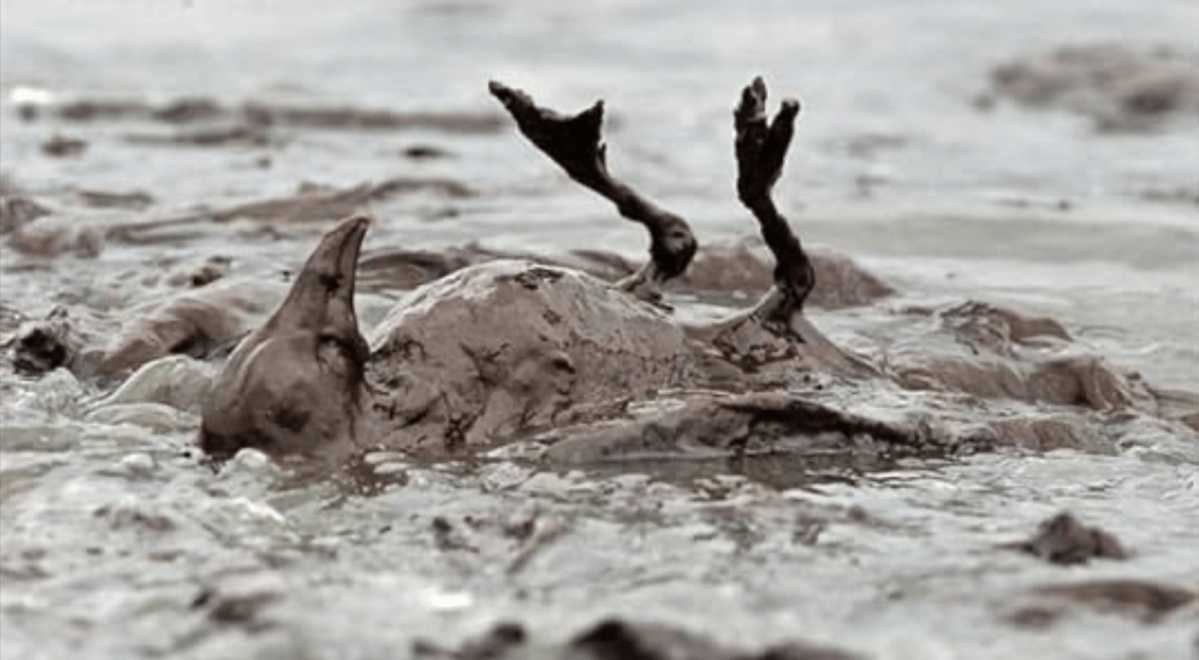
Photo by Charlie Riedel, Heavily oiled Laughing gull in the horrific BP oil spill in 2010.

 Oceans Not Oil