
More than the Wild Coast Vindicated
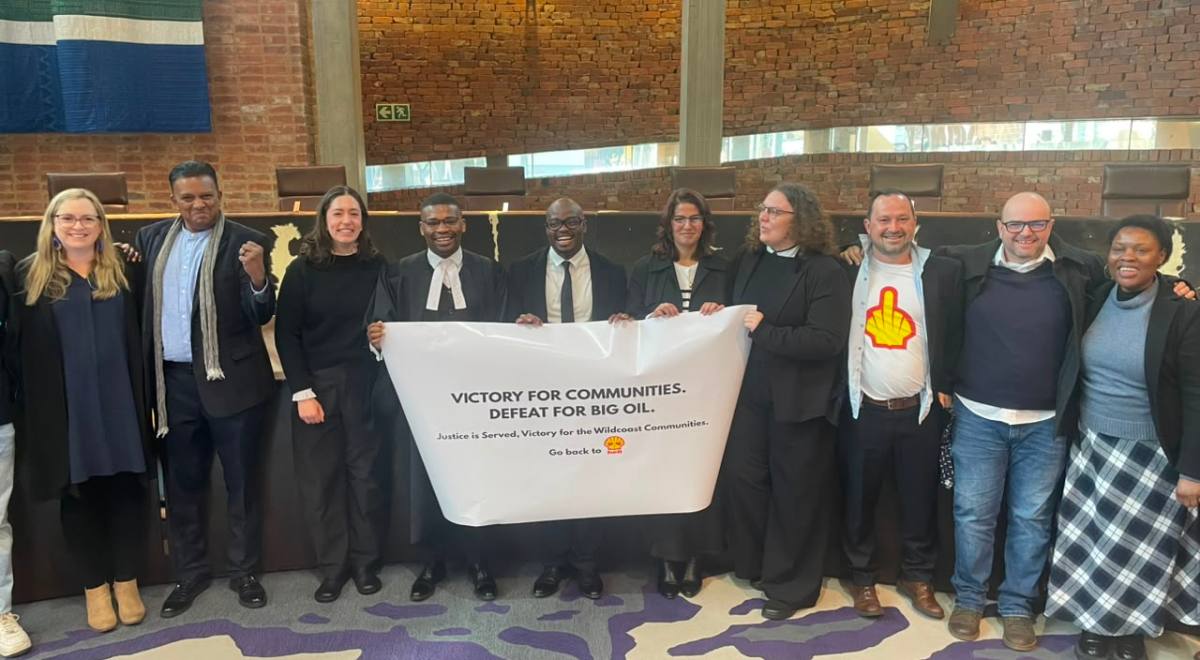
The significance of today’s Constitutional Court judgment in Sustaining the Wild Coast v Minister of Mineral Resources and Energy[1]extends far beyond Shell and Impact Africa’s Wild Coast exploration right – potentially transforming the legal landscape governing South Africa’s offshore oil and gas.
The dispute before the Constitutional Court concerned whether Shell’s exploration right which was unlawfully granted right could be revived through renewal. A majority judgment overturned the Supreme Court of Appeal’s decision to uphold Shell’s application to renew its exploration right, finding the right and renewals unlawful on three independent grounds: lack of meaningful consultation; failure to consider relevant factors including climate change, cultural rights, livelihoods and ecological harm; and failure to comply with the statutory objectives of the MPRDA.
Any future application would need to proceed within the current legal and factual context and be assessed afresh by the appropriate decision-maker. The Court rejected the notion that Shell’s financial investment of R1.1 billion or corporate expectations should outweigh the constitutional rights and interests of affected communities, future generations and the environment. By doing so, it reaffirms a foundational administrative law principle: unlawful decisions should ordinarily be set aside, and “just and equitable” remedies cannot be used to circumvent serious constitutional and legality defects.
Importantly, the Court recognised that the obligation to consult is a “matter of substance”, not a procedural formality. Meaningful consultation is fundamentally linked to human dignity and requires that affected people are genuinely heard before decisions are taken that may affect their lives, livelihoods, culture, heritage, religious practices, environment and the interests of future generations.
The majority judgment places section 24 of the Constitution at the centre of environmental governance, emphasising that environmental rights are not only procedural or statutory rights, but fundamental constitutional rights owed to both present and future generations. The Court explicitly links environmental protection to intergenerational justice, sustainable development and state accountability. This strengthens the constitutional status of environmental claims and makes it more difficult for decision-makers to treat environmental concerns as secondary to economic development.
The Court places considerable weight on the fact that coastal property is held by the state in trust for all South Africans and future generations. It emphasises the state’s heightened trustee obligations regarding ecologically sensitive coastal environments. This could have ramifications well beyond offshore oil and gas, affecting decisions relating to marine protected areas, coastal development, fisheries and other uses of common natural resources.
Taken together, the judgment suggests that future extractive projects will need to demonstrate:
- meaningful participation,
- consideration of climate impacts,
- consideration of cultural and spiritual rights,
- compliance with environmental justice principles,
- adherence to precautionary approaches where uncertainty exists, and
- consistency with sustainable development.
The Court’s repeated emphasis on participation, culture, livelihood, future generations and the public trust suggests a jurisprudence moving away from technocratic environmental management and toward a more democratic, rights-based and justice-oriented model of environmental governance. For South African environmental law, that may prove to be the judgment’s most enduring legacy.
For the last five years, South Africans from every walk of life have demonstrated an extraordinary commitment to defending our oceans through organising, research, public participation, litigation, storytelling and peaceful protest. Coastal communities, fishers, traditional leaders, scientists, activists, faith leaders, environmental organisations, legal practitioners, artists and ordinary citizens have helped establish important legal principles that will shape environmental governance long into the future.
We are immensely proud of the courage to take this all the way shown by Sustaining the Wild Coast and their legal and support teams. We also extremely proud of what has been achieved collectively. Every beach gathering, community meeting, court appearance, petition signature, scientific submission, public objection, documentary screening and act of solidarity has contributed to this moment. The oceans-not-oil movement that emerged in response to Shell’s seismic survey proposal has become a powerful expression of democratic participation and ocean justice grounded in care, dignity and accountability.
This work does not end today.
The broader questions raised by this case remain urgent. South Africa continues to face critical choices about energy, climate, biodiversity, livelihoods and economic development. We must continue working towards an energy future that is socially just, ecologically responsible and free from the toxic harms associated with continued fossil fuel expansion.
ONO remains committed to advancing an ocean future in which communities are respected as rights-holders, where decisions are not imposed from above, and where the voices of those most affected are central to determining the future of our shared ocean commons.
Together we can move towards a future powered by clean, non-toxic energy while protecting the living oceans upon which so many species and communities depend. We owe nothing less to future generations. No decision about their future should be made without us.
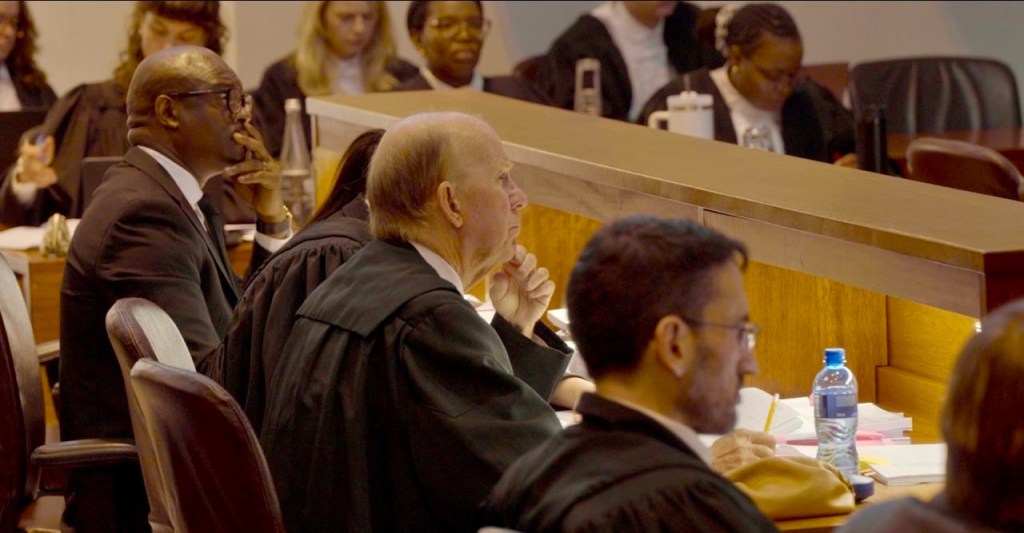
Photo: Bench for the Minister of Mineral Resources and Energy; Minister of Forestry, Fisheries and the Environment; Shell Exploration & Production South Africa B.V; Impact Africa Limited and BG International Limited
[1] Sustaining the Wild Coast NPC and Others v Minister of Mineral Resources and Energy and Others and Shell Exploration and Production South Africa BV and Others v Sustaining the Wild Coast NPC and Others (CCT 194/24 and CCT 196/24).
Justices presiding: Maya CJ, Kollapen J, Mathopo J, Mhlantla J, Musi AJ, Rogers J, Savage J, Theron J and Tshiqi J


