
Environmental Authorisation transferred to Shell – Block 5/6/7 Offshore Drilling
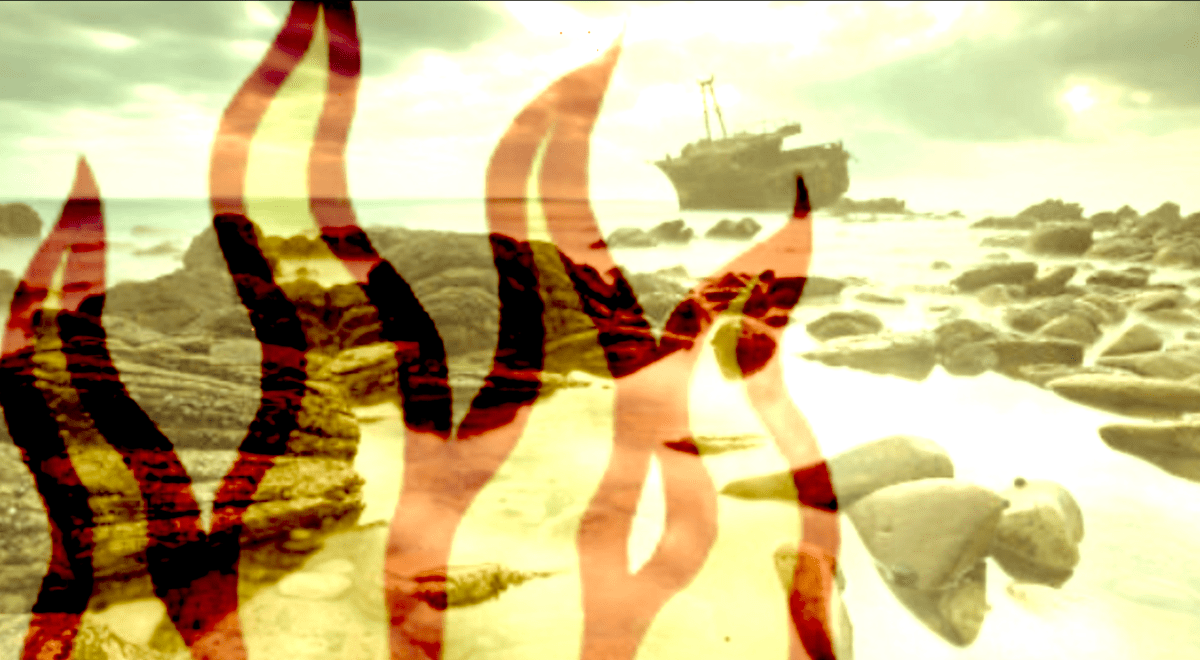
On 18 May 2026, the Petroleum Agency of South Africa (PASA) officially transferred legal ownership of the environmental authorisation for offshore Block 5/6/7 drilling from TotalEnergies to Shell. However, this transfer is largely administrative: the underlying environmental permit remains legally invalidated by the Western Cape High Court, and no exploration activities can take place until the ongoing appeal is resolved.
Block 5/6/7 is a 10,000 km² offshore concession situated between Cape Town and Cape Agulhas off South Africa’s south-west coast. TotalEnergies had originally proposed drilling up to five exploratory wells in the block to search for oil and gas, drawing significant opposition from local fishing communities and environmental organisations.
In August 2025, Judge Nobahle Mangcu-Lockwood of the Cape Town High Court set aside the environmental authorisation granted to TotalEnergies for exploratory drilling in Block 5/6/7, remitting the decision to the Department of Mineral Resources and Energy for reconsideration. The court upheld five of the six grounds raised by Natural Justice and Green Connections, finding that the Environmental Impact Report (EIR):
- failed to adequately assess the socio-economic impact of a potential blowout or oil spill on small-scale fishers,
- did not specifically consider the Integrated Coastal Management Act’s community-centred requirements,
- ignored the climate change implications of burning any gas discovered,
- overlooked transboundary impacts on Namibia and international waters,
- and lacked a site-specific oil spill and blowout contingency plan with proper public participation.
As a remedy, the court ordered further public participation to address these deficiencies, with TotalEnergies permitted to submit new or amended assessments before a fresh decision is made.
TotalEnergies subsequently withdrew from the block, transferring its 40% operating interest to Shell. So while Shell is now the designated operator, TotalEnergies appears to retain a legal stake in the block until the litigation is resolved, meaning the current ownership structure is:
- Shell (Operator): 40%
- TotalEnergies: 40% (exited operations, but retains legal rights pending litigation)
- PetroSA: 20%
Although PASA has now formally transferred the environmental authorisation to Shell, the courts have confirmed that the authorisation itself remains invalid pending further environmental assessments and public participation. Shell and the state have been granted leave to appeal the High Court’s ruling at the Supreme Court of Appeal, meaning all exploratory drilling remains legally halted for the foreseeable future.
The failure to conduct a Strategic Environmental Assessment (SEA) of South Africa’s offshore oil and gas sector — and to properly assess socio-economic impacts on fishing and coastal communities — carries serious risks. Historic spills consistently show that small-scale and artisanal fishing communities bear the heaviest burden. Following the 2019 Brazilian oil spill, sales dropped by more than 50% across all types of fishing, severely undermining local income generation. Communities already facing social and ecological vulnerability had their subsistence, food security, and cultural maintenance profoundly compromised. South Africa’s West Coast communities are in a strikingly similar position. Fishers from Lambert’s Bay have noted that for generations their families have relied on traditional fishing to put food on the table, and that oil exploration directly threatens their ability to provide for their children and support their communities. Without a proper socio-economic assessment, the baseline vulnerability of these communities is not even documented — meaning there is no foundation for measuring harm or securing compensation should a spill occur.
The social fabric of fishing communities is routinely shattered by spills. Following Deepwater Horizon, coastal residents reported decreased income, lost jobs, and disruption to work and family life, resulting in mental health distress in themselves and their children, with negative impacts most common in fishing communities. Exposure to oil can have genotoxic, immunotoxic, and endocrine effects that manifest years after exposure, with women, older adults, and children being the most susceptible. For communities already historically marginalised, as is the case along South Africa’s West Coast, these compounding harms can be generational.
Even in well-resourced jurisdictions, justice for affected communities is elusive. The Exxon Valdez case dragged through courts for nearly 20 years before victims received their payments, and in developing countries, legal and bureaucratic delays often prevent victims from receiving fair compensation, extending economic pain for decades. South Africa lacks the equivalent of the US Oil Pollution Act framework, meaning small-scale fishers would face enormous hurdles in claiming losses — particularly without pre-spill socio-economic baselines to anchor their claims.
The absence of an SEA and a proper socio-economic impact assessment means there is no sector-wide understanding of cumulative risk, no documented baseline for affected communities, no framework for compensation, and no meaningful accountability mechanism should the worst happen. The global record is unambiguous: when these assessments are skipped, it is always the most vulnerable communities — small-scale fishers, coastal families, women and children — who pay the price.
References:
Centre for Environmental Rights (no date) Mineral & Petroleum Extraction. Available at: https://www.cer.org.za/safeguard-our-seabed/mineral-and-petroleum-extraction
Sumaila, U.R., Cisneros-Montemayor, A.M., Dyck, A., Huang, L., Cheung, W., Jacquet, J., Kleisner, K., Lam, V., McCrea-Strub, A., Swartz, W., Watson, R., Zeller, D. and Pauly, D. (2012) ‘Impact of the Deepwater Horizon well blowout on the economics of US Gulf fisheries’, Canadian Journal of Fisheries and Aquatic Sciences, 69(3), pp. 499–510. doi:10.1139/F2011-171
Mail & Guardian (2026) ‘No one asked us’: West Coast fishers oppose offshore oil and gas development, 29 April. Available at: https://mg.co.za/the-green-guardian/2026-04-29-no-one-asked-us-west-coast-fishers-oppose-offshore-oil-and-gas-development/
NOAA Office of Response and Restoration (no date) People and Pollution: The Social Impacts Oil Spills Have at a Community Level. Available at: https://blog.response.restoration.noaa.gov/people-and-pollution-social-impacts-oil-spills-have-community-level
NOAA Ocean Service (2024) How do oil spills impact people? Coastal Pollution Tutorial. Available at: https://oceanservice.noaa.gov/education/tutorial-coastal/oil-spills/os05.html
Estevo, M.O., Lopes, P.F.M., Oliveira Júnior, J.G.C., Junqueira, A.B., Santos, A.P.O., Lima, J.A.S., Malhado, A.C.M., Ladle, R.J. and Campos-Silva, J.V. (2021) ‘Immediate social and economic impacts of a major oil spill on Brazilian coastal fishing communities’, Marine Pollution Bulletin, 164, p. 111984. doi:10.1016/j.marpolbul.2021.111984.
Gonçalves, J.E., Leite, A.C.V.M., Lima, V.M.C., Souza, W.V., Rego, R.C.F., Santos, M.O.S. and Gurgel, I.G.D. (2024) ‘Socio-occupational conditions and health of fishers exposed to the oil disaster-crime in Pernambuco, Brazil’, Revista Brasileira de Epidemiologia, 27, e240050. doi:10.1590/1980-549720240050. Available at: https://www.ncbi.nlm.nih.gov/pmc/articles/PMC11481045/
The Businesses South Africa (no date) Offshore Oil & Gas in South Africa: Risks Over Rewards. Available at: https://www.businesses-south-africa.co.za/portal/article/4961/offshore-oil-and-gas-in-south-africa-risks-over-rewards
US Center for American Progress (2010) Oil Spills by the Numbers, 30 April. Available at: https://www.americanprogress.org/article/oil-spills-by-the-numbers/
US Congressional Research Service (2011) The Deepwater Horizon Oil Spill and the Gulf of Mexico Fishing Industry. Available at: https://www.everycrsreport.com/reports/R41640.html


