
Ultra Deep = Ultra Dangerous
Here are some excerpts from Oceans Not Oil’s submission on Proposed Exploration Drilling in Block Northern Cape Ultra-Deep (NCUD), on the West Coast of South Africa, Draft ESIA Report [SLR Project No. 723.000073.00001]
MASSIVE UNDERSTATEMENT OF RISK FROM OPERATION AT ULTRA DEPTH
- The ultra-deepwater designation of this project emphasizes the technical complexity, advanced technology, and higher risks involved in drilling at such depths, where conditions are extreme, including high pressures, low temperatures, and logistical challenges.
- The Deepwater Horizon disaster occurred in water less than half as deep (1,524 meters below the surface) as the pioneer depths at which NCUD will operate (2500m- 3200m). This brings with it the greater potential of gas kick events which occur frequently due to extremely narrow mud weight window and negligible safety margins for well control purposes (Azar and Samuel, 2007), well blowouts, pipeline or riser ruptures. Further, traditional gas kick detection methods in such environments have significant time-lag (Islam 2017; Zhou 2011) and can often lead to severe well control issues
(Zhou 2016) and occasionally to well blowouts or borehole abandonment.
(Yin et al. 2021), which danger is not raised in the DESIA. - Cordes et al have established that the frequency at which accidental discharges of crude oil occuring offshore suggests that they can be expected during “typical” operations (Cordes et al. 2016).
- Muehlenbachs et al have shown the likelihood of an accidental release of hydrocarbons or blowout increases with the depth of the operations (Muehlenbachs, Cohen & Gerarden 2013). Their analysis found that each 30,5m of added depth from an average platform increases the probability of a company-reported incident (oil spills, blowouts, accidents and injuries) by 8.5%.
- Blowout frequency is expected to increase with operations in deeper waters (Murawski et al. 2019)
- Ultra-deep reservoirs are often at greater risks of mud losses and well-control issues since they are at higher pressure (> 15,000 psi) and have high temperature (>82 oC) (UDAC 2013).The Final ESIA needs to broach site-specific safety and environmental risk assessment associated with functionality at ultra depths.
- Please include anticipated well depths into the seafloor of all wells planned.
- Details of exactly how mitigation of subsurface release will be managed at this depth need to be available to stakeholders and the public.
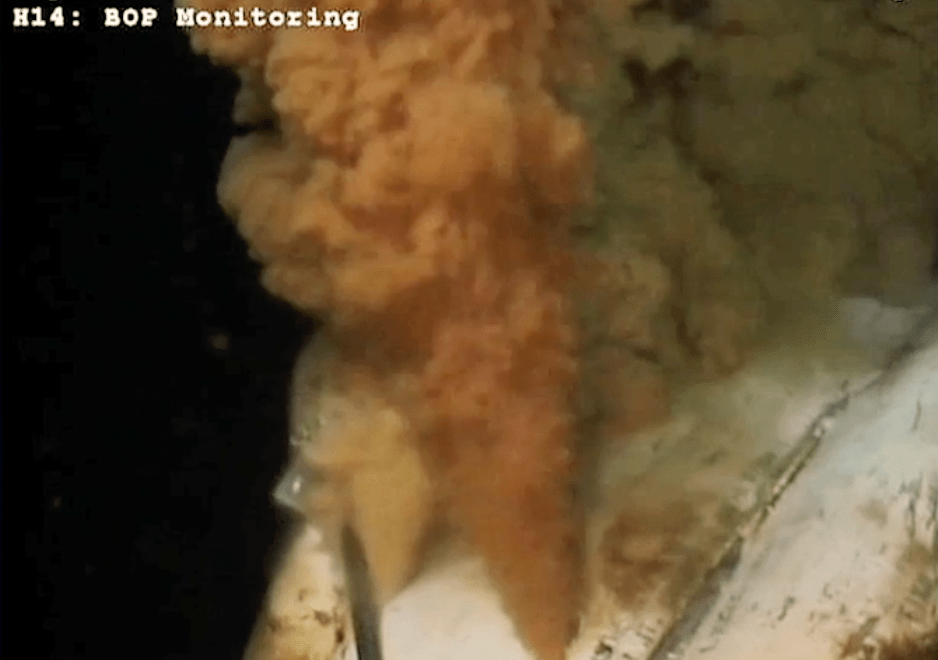
FLAWED OIL SPILL MODELLING - Given the greater potential for risk at NCUD (clarified in 2.a. above) it is important to establish a worst-case scenario based on facts related to the largest oil pollution event at the shallower Deep Water Horizon (DWH) blowout event. During DWH nearly 5 million barrels were released over 87 days, with a final estimated flow rate of 50 000 – 70 000 barrels per day (bbl/day) (McNutt et al. 2012; Griffith et al. 2012), or 8,400 m3/day, before the wellhead was capped on July 15th, 2010.
- Appendix F does not recognise this historical blowout frame of reference.
- Appendix F uses a weak, maximum flowrate (3,180 m³/day) and short spill duration of only 20 days, assuming a speculative minimum timeframe for successful capping of the well.
- ‘Worst case’ scenario should consider the extreme sea conditions with anomalous waves in the Agulhas Current, which would prevent any first-response from being rapid and efficient. Indeed, ideal sea conditions are required to deploy a capping stack in waters exceeding a few kilometres. The duration of the modelled spill is not ‘worst’ case scenario but in fact represents ‘best’ case scenario.
- Given differences in flow rates from reservoirs depending on their geological formation, there is no stated base for considering such a weak flow-rate for ultra-deep, and ultra-high pressure oil and gas reservoirs —especially since these wells will be twice as deep as DWH.
- The conditions of flow-rate in the blowout scenarios presented are at least one order of magnitude less than expected for deep-sea blowouts (maximum of 6,604 b/d at 2,883 m depth) (Paris, 2019).
- These above model configurations are not acceptable: low volume of released oil and duration of the spill is not what should be presented as ‘worst case scenario’, and cannot be relied upon for rational and reasonable decision making.
- The Final ESIA must justify the statement that there would be “no chance of shoreline oiling” should there be severe onshore winds.
- Based on the above, the Climate Change Risk Assessment Appendix / Appendix O needs to significantly increase its assumptions for the total GHG emissions from a blow-out being 1,539,976 tCO2e.
SOCIO ECONOMIC ENVIRONMENT - The DESIA has failed to make clear that this project has the potential to reduce tuna catch rates for large pelagic longline fisheries and small-scale fishers for well over 3 years, which could prove catastrophic for some of them. These fisheries spend most of its time at sea searching for fish with actual fishing events taking place over a relatively short period. The significance of impact of both cumulative effects and extended duration should be considered extremely high should any displacement or accidental discharges occur, not “the LOW significance”indicated. The significance of impact of both cumulative effects and extended duration should be considered high and compensation for loss of income must be established through a Cost Benefit Analysis. All local fisheries and coastal tourism should be evaluated.
- And the constitutional rights of fishers must be accommodated by transparent, convincing, accounting utilising up-to-date data for compensation for loss of income to fisheries and subsidiary businesses.
- These figures should be independently audited and must include economic losses by disruptions, loss of earnings plus the effects of negative publicity, persisting public perceptions, and potential fishing and harvest bans.
CRITICAL BIODIVERSITY AREAS IGNORED
Since Appendix J suggests that,” The Licence Block overlaps with a CBA and EBSA, and should drilling targets be identified within, or immediately adjacent to these areas, provision would need to be made to undertake the required site-specific assessments and collect quantitative baseline data. This may take the form of surveys including high-resolution mapping, visual seafloor imagery and benthic samples to characterize the faunal community and ensure proper species identifications (Cordes, et al., 2016).” The DESIA understates the project’s direct area of influence.
- The DESIA has not adequately dealt with the concept that “Petroleum production is classified as “not compatible” in CBAs (Harris et.al. 2022)”
- The environmental assessment process is used to understand the potential environmental impacts of a development. This project will produce intense man-made noise pollution, produce carcinogenic, radioactive and polluting wastes in the water column and on the sea bed, over an extensive area possibly for years, next to critical biodiversity areas.
- A full evaluation of each of these CBAs and MPA/ ESA and their sensitivities are expected to be fleshed out in the ESIA.
NEED AND DESIRABILITY - The DESIA has confused the direct outcomes of the NCUD exploratory project with commercial production. The exploratory wells are specifically described to be non-production wells and so will not add to the “economic activity and growth”, “stable electricity supply “nor will they result in “transition to net zero carbon”. These are all potential impacts that would depend on the commercial development of the field and, as such, are beyond the parameters that were established for this report. They would be suitable for a project directed at the commercial exploitation of the field, however, all the other impacts would have to be assessed using the same parameters and criteria.
- The project will either find oil and/or gas or not, hence it has at least a 50% chance of advancing from exploration to production. Production processes must therefore be precautiously considered as sequential to exploration due to the massive potential impacts of the latter as a primary cause of global warming.
- Report is notably deficient, particularly in its Needs and Desirability analysis, by failing to substantively address the complexities of climate change impacts, should commercially-viable oil and gas resources be identified, produced, and utilized. The assessment should conclude whether the development of new oil and gas fields is compatible with South Africa’s climate change commitments without avoiding the harsh reality that expanding fossil fuel development and climate change are indeed irreconcilable.
- Please explain the need for additional fossil fuels coming online in light of the IPCC’s 2022 report being resolute that global oil and gas production and consumption must decrease by 30% by 2030 and that new oil and gas development and exploration must end immediately. These findings are supported by the IEA’s Net-Zero by 2050 report[i]
- This report starts from the assumption that planetary tipping points and accelerating climatic events will wait, while South Africa adds gas to its reliance on coal, and that their consequential greenhouse gas (GHG) emissions will be benign.To frame this project, which continues to expand and sustain the use of fossil fuels, which in turn exacerbate global warming, human health issues, pollution and extreme climate events, as consistent with “promoting sustainable exploration for local oil and gas resources”, is an abuse of public trust.
- As such we submit that the DESIA report cannot ensure informed and responsible decision-making, thereby endangering the well-being and resilience of present and future biodiversity, including human society, and posing serious ethical concerns given the imminent danger of climate change.
UNCLEAR DURATION
Please clarify the total anticipated time for this project, as there are distinct variances between the different reports of operations– ranging from less than 2 years (p 569), 3 years to complete (p574) by 2027 (DESIA p574) to Shell requesting a 5 year validity to renewal of its Exploration Right for Licence Block NCUD p578 :
- Is it true that potentially this project could take up to 280 days per well (45 days mobilisation; 90 days drilling; 120 days appraisal well, 15 days well plugging, 10 days demobilisation)?
- Does this then mean there is the potential for Shell and partners to be occupied in this ocean space for 7 and a half years, rather than the 3 years stated?
- If not, how will the wells be managed concurrently?
- Please describe this operation, including how many vessels etc will be managed.
Please give details on the maximum time this project could take.
DEGREE OF SIGNIFICANCE OF HERITAGE RESOURCES NOT RECOGNISED BY RECOMMENDED MITIGATION
- Overwhelmingly offshore oil and gas projects, including NCUD, have failed to obtain a valid social license to operate from local First Nation and West Coast coastal communities, or approval among its stakeholders. This is further borne out:
- In the Christian John Adams & Others (13 applicants) v Minister of Mineral Resources and Energy & Others. (2022, March 1) court interdict.
- Aukotowa Fisheries Primary Co-Operative, Green Connection, Natural Justice v v Minister of Mineral Resources and Energy & Others (2024, Nov 6).Countless marches and demonstrations and other articulations of dissent as small-scale fishers & associations, civil society and the public have protested against offshore oil and gas operations, which had its maximum expression in a national coastwide march (Dec 2023).
- Countless marches and demonstrations and other articulations of dissent as small-scale fishers & associations, civil society and the public have protested against offshore oil and gas operations, which had its maximum expression in a national coastwide march (Dec 2023)
- First Nation, Indigenous and West Coast coastal fisher community cosmologies and standpoints appear marginalised in the Appendix M Intangible Cultural Heritage Impact Assessment. As such Appendix M offers fails to provide sufficient evidence regarding the potential impacts of the project on local traditional tangible and intangible heritage.
- Nor does the ICHA deal with the potential impact to social unrest the project could cause in these communities.
- The Appendix M does not consider the No-Go option, but suggests (without due consideration of their cumulative effects) that, by comparison to the destructive nature of other mining activities at least NCUD ”proposed operations will, by contrast, have mitigation, including emergency measures in place.” Appendix M does not provide lucidity on how a NCUD oil spill halting livelihoods in times of economic difficulty and how radical impact to marine-related intangible cultural heritage would be mitigated.
- OPERATIONAL WASTE – TOXICITY, RADIOACTIVITY & POLLUTION
- Considering that the AOI is surrounded on all sides Critical Biodiversity Areas (CBAs) alternatives to release of drill cuttings overboard must be reassessed.
- Global literature cites that discharges at similar depths may produce cuttings accumulations of up to 20m thickness, with volumes ranging between 1000 – 14,000 m3 (Cripps et al. n.d.) of the well site and gradually get thinner away from the wellhead, compared to the 6.8km risk range of toxic sediment described in the Appendix E Drilling Discharge Modelling. Please justify this understatement in the final ESIA and why risk might dissipate at the ultra drill, anoxic depths after 10 years.
- Chemical toxicity is obviously a concerning stressor, please explain in layman’s terms how each component affects the marine environment and inhabitants.
- A detailed composition of these emissions and effluents regarding their toxicity, biodegradation, polynuclear aromatic hydrocarbon content, and their metal content need to be made public/ described in the ESIA.
- Risk of the cumulative exposure to toxic and non-toxic stressors (dissolution of the chemicals, transport and deposition of particles, biodegradation, attachment of chemicals to particles, and eventually formation of agglomerated particles), and the fates of the discharge compounds in the sediment (e.g., concentrations and biodegradation in the sediment, bioturbation, equilibrium partitioning for organic chemicals and heavy metals, oxygen content in the porewater, change of grain size, and burial) from the tonnes of discharge from 5 wells needs to be assessed.
- What assurances are there that drill cuttings will be treated to reduce oil content before disposal overboard?
- Please advise as to which actual licenced waste contractor will be used for disposing of volumes of NADF remaining from the project. It is in the public interest to know the name of the contractor should the option be employed.
- Please advise as to which actual licenced radioactive waste contractor will be used for disposing hazardous wastes from the project, for the same reasons as above.
- Radioactive sources may be used for certain types of data acquisition.
- Please identify, and declare the half life/rate of radioactive decay, of the radioactive sources.
- Please identify the exact methods to be used for the treatment and also disposal of toxic radioactive drill wastes, frack flowback, drill mud, all radioactive substances and related tools, instruments used in the usage of any radioactive materials.
- Shell have endorsed the Zero Routine Flaring by 2030 (Shell ZRF by 2025) initiative launched by the World Bank and the United Nations in 2015 for new field development, so what consequence does this hold for this operation?
- Has a greenhouse gas mitigation plan been prepared and submitted to the Minister for approval?
EXPLOSIVE USE
The DESIA mentions that “drilling unit will be equipped with a secure store for explosives, plus igniter, booster” (p133). Please explain the purpose of these explosives.
The DESIA specialist reports have not been able to provide clear context of sustainable development and justifiable economic and social development, instead they highlight the very clear jeopardy to the extremely biodiverse marine ecology, intangible heritage, subsistence and commercial fisheries are of high and medium significance; the tourism, recreation and hospitality industries could be devastated by an oiled coastline and that job opportunities for locals are minimal.
For all the reasons stated above, it is our request that the proposed project does not proceed.

 Oceans Not Oil
4 thoughts on “Ultra Deep = Ultra Dangerous” Leave a comment ›