
West Coast Block 3B/4B: Eco Atlantic to spud more exploration wells – ONO comments on Scoping Report
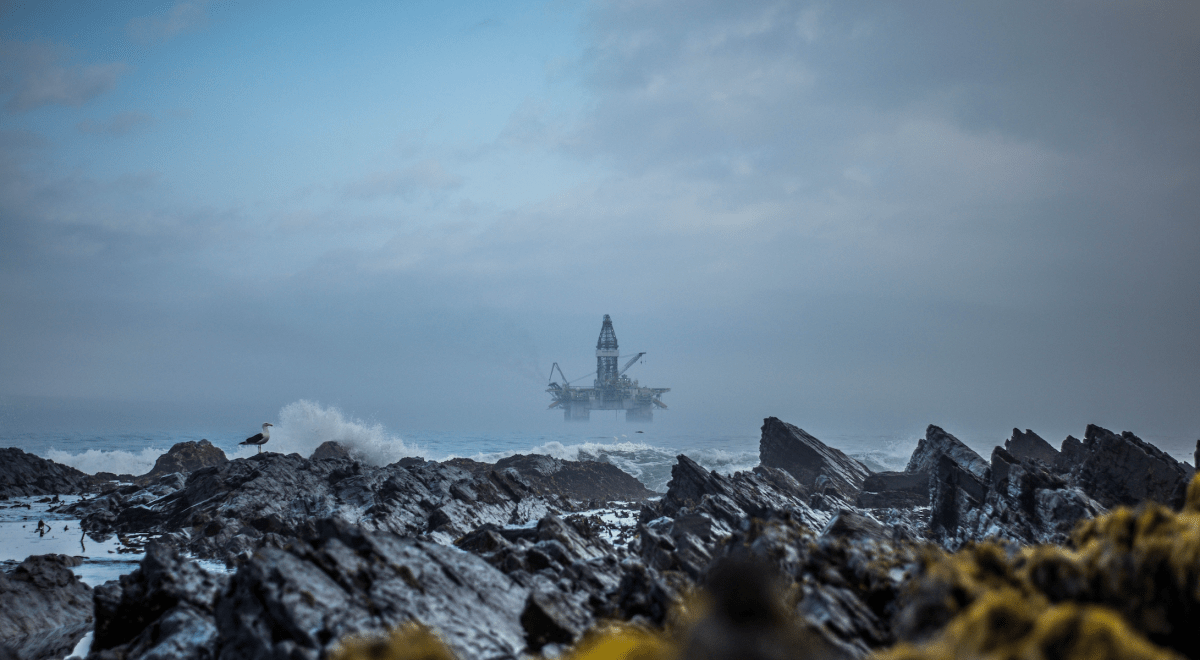
The oil and gas exploration company (not so) Eco Atlantic Oil and Gas acquired Azinam South Africa early in 2022, including Azinam’s entire offshore asset portfolio, which includes Block 2B (and 3B&4B). Eco Atlantic Oil and Gas prematurely announced its intension to spud exploration wells in Block 3B/4B, declaring a starting date as Sept 1, however the earliest anticipated date for commencement of drilling would only be between first and third quarter of 2024, since the Scoping Report was only released for comment in July (see below), and the public needs to have their say about the ocean commons.
Predictably it seems the environmental assessor is already trying to side step diligent scoping for massive cumulative impacts of the intensive mining already degrading this coastline and the inundation of the West Coast by ‘big oil after the recent finds in Namibia.
Joint venture (JV) partners are Ricocure (Pty) Ltd (33,75%) and Africa Oil SA Corp (20%- a Canadian oil and gas company producing in deepwater Nigeria). Here is ONO’s Submission on Draft Scoping of the Proposed Africa Oil South Africa Corp (AOSAC) Block 3B/4B Offshore Exploration Right:
CLIMATE IMPACTS AND APPLICABILITY TO SOUTH AFRICAS OBLIGATIONS
South Africa is a signatory of the Paris Climate Agreement and has committed on the global stage to reduce Greenhouse gas emissions in an attempt to limit climate change. This has resulted in a domestic National Climate Change Response White Paper which details South Africa’s plans to shift away from fossil fuels. There is a need to evaluate what the true need for oil and gas in the South African context actually is, in other words, a thorough evaluation of the no-go option. Moreover, there is a need to go beyond the exploration phase when a review of need and desirability is undertaken, while also assessing and quantifying the impacts of emissions during the exploration phase. Therefore, two further studies are required a) a Needs and Desirability Evaluation (by an independent consultant), and b) a Climate Impact Assessment, taking into account South Africa’s Nationally Determined Contributions, while it plans to shift away from fossil fuels.
TOXICITY, RADIOACTIVITY & POLLUTION
A Radioactivity Impact Assessment Report has been excluded in the list of Reports anticipated. This is a pertinent report and should provide details and describe the compound ingredients, levels of expected toxicity and radioactivity of the lubricants used, and their effects to species (including human), as well as larval stages.
WELL ABANDONMENT
Well failure is a common enough issue (Vignes et al 2008) and serious. Please advise as to which actual contractor will be used for well plugging. Will the well abandonment be permanent or temporary and what types of well barriers will be utilised, as well as the types of plugging materials utilised, their functioning and verification?
Please describe the well-integrity testing methodology to be utilised.
Incidents involving radiation sources in well logging have occurred mainly as a result of operator error or equipment failure. According to the International Atomic Energy Agency (2020) Radiation Safety In Well Logging: Specific Safety Guide report, the hazards involved and the necessary control measures should be identified for each of the following conditions:
- Storage of the well logging sources;
- Calibration and operation of the well logging tools;
- Transport of the sources;
- Work at the site with the well logging tools;
- Maintenance of the tools;
- Disposal of disused sources; and
- The possibility of theft and sabotage of radioactive sources.
Please identify control measures for each of these conditions.
Please provide a report on how the applicant will ensure well monitoring to identify bubbling/leaking events will be carried out after drilling/ logging/ production/ de-commissioning has ceased.
NOISE EMISSIONS
It is noted that a Noise Emission Impact Study has been excluded from the list of anticipated Reports. Given the extensive time period and noise of drilling activities, this study should be considered pertinent. Although this area is regarded as a high marine traffic zone, this is not an good reason to exclude a noise impact study. Furthermore, it is noted that in the draft scoping, there is no regard for cumulative impacts in the soundscape. Cumulative impacts are a pertinent consideration in this type of impact and emission.
South Africa is a signatory to a resolution passed at the 67th International Whaling Commission (IWC) 2018 for the elimination of acoustic pollution that affects whales (of all 13 species and populations considered under the IWC), and therefore has a duty to cooperate. Please explain how South Africa can fulfil this duty given the extensive timeline of this project while creating significant disturbance for an extended period on protected and unprotected species.
Furthermore, the identified marine noise specialist must be capable and equipped to undertake in situ measurements (if they do not already exist) of the sound scape, and have the ability to interpret hearing thresholds (both Temporary Threshold Shift-based thresholds (TTS) and Permanent Threshold Shift (PTS)) of marine fauna in the proposed area. Rather than establishing the safety zone radius solely based on a fixed distance, the safety zone radius should be, at most conservative, of either 500 meters or a radius determined using propagation models based on the best available data and science for a pre-determined acoustic threshold (McQuinn and Carrier, 2005).
Please ensure the following cumulative acoustic limits are included in the noise emission study for all species expected to be impacted:
a. Multi beam echo-sounder (70-100 kHz)
b. Single beam echo-sounder (38-200 kHz)
c. Sub-bottom profiler (2-16 kHz)
d. Vertical Seismic Profiling (please confirm the relevant Hz range)
e. Sea bed coring
f. Noise from the rig
g. Noise from the many vessels operating simultaneously
h. Dynamic Positioning Systems from all vessels, including support vessels.
EMERGENCY RESPONSE
Please describe the protocol and time frame of response if there are accidental leakage/blowout from more than one well.
Oil Spill Contingency Plan (OSCP) for Subsea and Surface Release, detailing Oil Spill Response, including the Blowout Management Protocol, Planning and Capacity, must be reported to both stakeholders and the public relevant for each exploration, extraction or decommissioning operation; must include the possibility of more than one event; and must be made available for proper stakeholder and I&AP engagement.
Any deficit of technological expertise / resources / difficulty of effective co-ordination with all government or conservation agencies that have a statutory responsibility for some aspect of offshore oil and gas activities regarding incident management, should be highlighted.
The delegated National Incident Commander, along with the intended lines of responsibility for inter-agency efforts, should be made available for proper stakeholder and I&AP engagement. The citizens of South Africa need assurance that incident management is fully informed and has capacity to deal with the latest technology, practices and risks associated with, and due to, the different geological and ocean environments being explored, prior to the commencement of drilling.
An Assessment of Onshore Environment and Mitigation in case of oil pollution must be supplied. Buried oil contaminants can resurface as the beach erodes. Buried oil must be removed through mechanical excavation. Details on the cross-shore distribution of oil contaminants relating to beach morphodynamics to ensure optimize beach clean-up planning need to be provided.
A Dispersant Use Plan must be included, where most appropriate dispersants must be listed. An explanation of their chemical components, toxicity, and potential for bioaccumulation, ecological impacts through the water column and on the shoreline, and their specific function must be also provided.
SOCIO ECONOMIC ENVIRONMENT
The significance of impact of both cumulative effects and extended duration should be considered high and compensation for loss of income must be established through a Cost Benefit Analysis. All fisheries should be evaluated.
For all the reasons stated above, it is our urgent request that the proposed exploration does not proceed.
CITATIONS
INTERNATIONAL ATOMIC ENERGY AGENCY, (2020) Radiation Safety in Well Logging, IAEA Safety Standards Series No.SSG-57, IAEA, Vienna.
McQuinn, I.H. and Carrier D. (2005). Far-field measurements of seismic airgun array pulses in the Nova Scotia Gully Marine Protected Area. Can. Tech. Rep. Fish. Aquat. Sci. 2615: v + 20 p.
Tasker, M. L., Amundin, M., Andre, M., Hawkins, A., Lang, W., Merck, T., … & Zakharia, M. (2010). MARINE STRATEGY FRAMEWORK DIRECTIVE Task Group 11 Report Underwater noise and other forms of energy. Report No. EUR, 24341,2010.
Vignes, Birgit, and Bernt S. Aadnoy. Well-Integrity Issues Offshore Norway.” Paper presented at the IADC/SPE Drilling Conference, Orlando, Florida, USA, March 2008.

Photo Credit: Clyde Thomas

 Oceans Not Oil